


Calming an anxious child at the dentist can feel challenging for many parents in Gilbert, AZ. Dental anxiety is common among children and may make routine checkups, cleanings, or treatment more stressful for the entire family. However, understanding what causes dental fear and using supportive, age-appropriate strategies can help children feel safer and more comfortable during visits.
At Island Dental – Dentist Gilbert, AZ, Dr. Naman B. Patel and the team work with families to create positive dental experiences from an early age. The goal is not to force a child to “be brave,” but to build familiarity, trust, and confidence over time.
Why Children Develop Dental Anxiety
Dental fear in children can develop for several reasons. Some children may have had an uncomfortable medical or dental experience, while others may feel anxious because they do not know what to expect. Even hearing a frightening story from a sibling, friend, or family member can influence how a child views dental visits.
Fear of the unknown can play a major role. When children do not understand what will happen during an appointment, they may imagine situations that are much more frightening than the actual experience. Younger children may also be sensitive to unfamiliar sounds, bright lights, new equipment, or changes in their routine.
Parents’ attitudes can also affect how children respond. Children often notice facial expressions, tone of voice, and body language. If a parent appears nervous or repeatedly asks whether the child is afraid, the child may begin to believe there is something to fear.
Understanding the possible cause of anxiety helps parents and dental professionals respond with patience and appropriate support.
Evidence-Based Strategies for Calming Your Anxious Child at the Dentist
Children often respond well to techniques that make the dental experience more predictable and manageable. These strategies can help reduce fear while encouraging cooperation and confidence.
Tell-Show-Do
Tell-Show-Do is a commonly used behavior-guidance technique in children’s dentistry.
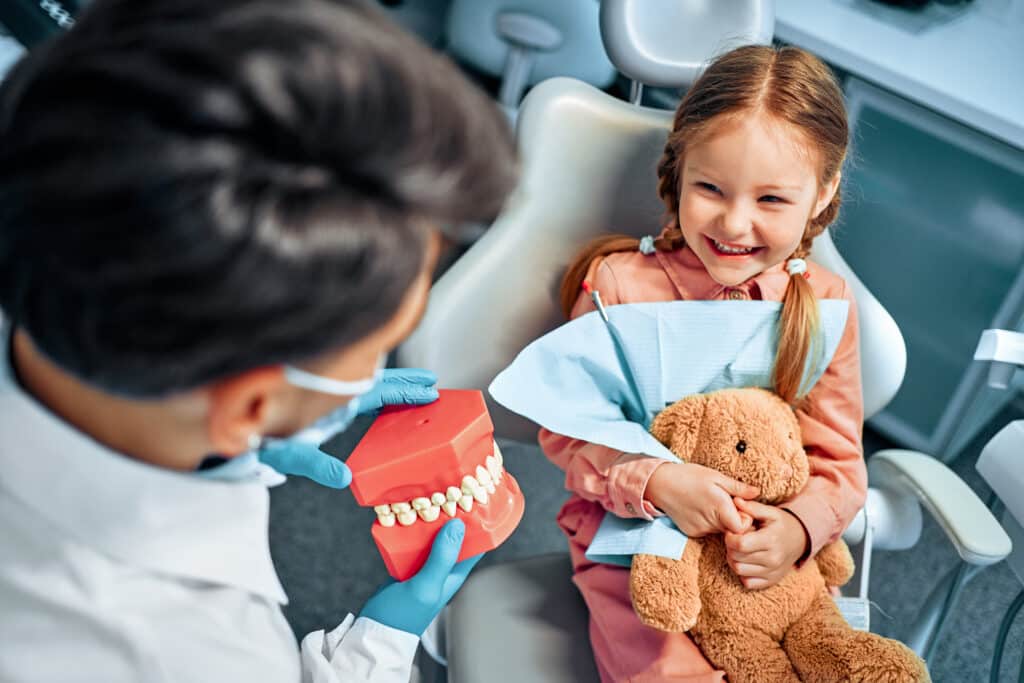
The dental team first explains what will happen using simple, child-friendly language. Next, the child may be shown the instrument or procedure in a non-threatening way. The dental professional then completes the planned step.
This approach reduces surprises and helps children understand what they are seeing, hearing, and experiencing.
Positive Reinforcement
Positive reinforcement focuses on encouraging helpful behavior rather than criticizing fear. Praise your child for specific actions, such as sitting in the dental chair, opening their mouth, listening to instructions, or asking questions.
You might say:
- “You did a great job sitting still.”
- “You listened carefully to the dentist.”
- “You were very helpful during your checkup.”
Small non-food rewards, such as stickers or choosing a favorite activity afterward, may also encourage a positive association with dental visits.
Distraction Techniques
Distraction can help children shift their attention away from unfamiliar sounds or sensations. Depending on the dental office and the child’s needs, helpful distractions may include music, a favorite story, a video, or conversation.
Parents can ask the dental team whether their child may bring a comforting item, such as a small stuffed animal or favorite toy.
Slow, Controlled Breathing
Simple breathing exercises may help some children feel calmer. Before the appointment, practice slow breathing at home. You can ask your child to breathe in gently through the nose and slowly breathe out as if they are blowing bubbles.
Keep the instructions simple. The goal is to help the child relax rather than make breathing feel like another task they must perform perfectly.
Gradual Familiarization
Some children benefit from becoming comfortable with the dental environment step by step. A routine checkup may help a child learn that the dental office is a safe and predictable place.
Regular preventive visits can reduce the need for a child’s first major dental experience to occur during an emergency or painful problem.
What Parents Should Do Before the Appointment
Preparation at home can influence how a child approaches the visit. Avoid using dental appointments as a threat or punishment. Statements such as, “If you do not brush your teeth, the dentist will be angry,” can create negative associations.
It is also helpful to avoid saying, “The dentist will not hurt you,” unless your child has already expressed a concern about pain. Introducing the idea of pain may unintentionally create a fear that was not previously present.
Instead, use calm and positive language. You might say:
“The dentist will count your teeth and check how they are growing.”
Or:
“The dentist helps keep your teeth healthy and strong.”
Keep explanations honest but simple. Avoid giving unnecessary details about treatment before the dental team has explained what is appropriate for your child’s age and situation.
You can also read a child-friendly book about visiting the dentist or play “dentist” at home. Let your child take turns being the dentist and the patient. Familiar play can help make the experience feel more predictable and less unfamiliar.
For children who feel nervous about dental visits, kid-friendly dentistry in Gilbert can provide a welcoming environment where they can become familiar with the dental office and build confidence over time.
What to Bring to the Dental Appointment
A familiar item can provide comfort, especially for younger children. Consider bringing:
- A favorite stuffed animal or small toy
- A comfort blanket
- Headphones, if permitted
- A quiet activity for the waiting area
- Any information the dental team may need about your child’s concerns or previous experiences
Try to arrive a few minutes early so your child does not feel rushed. A calm arrival can make the transition into the office easier.
If your child has a strong fear, sensory sensitivity, developmental concern, or previous negative dental experience, inform the dental team before the appointment. Sharing this information allows the team to adjust communication and provide appropriate support.
What Parents Should Do During the Visit
Children often look to their parents for cues about how to react. Try to remain calm and use a relaxed tone of voice. Avoid repeatedly asking questions such as, “Are you scared?” or “Does that hurt?” because these questions may increase attention to fear or discomfort.
Instead, offer simple encouragement:
- “You’re doing a good job listening.”
- “You can take this one step at a time.”
- “The dentist will explain what happens next.”
Allow the dental team to guide the conversation when appropriate. Dental professionals who work with children often use age-appropriate words and behavior-guidance techniques designed to make the visit easier to understand.
If your child becomes upset, stay supportive without expressing frustration. Some children need extra time to become comfortable, and progress may happen gradually.
What Parents Should Avoid
Certain approaches may unintentionally make dental anxiety worse.
Avoid:
- Using the dentist as a punishment
- Sharing frightening dental stories in front of your child
- Making promises that may not be accurate
- Criticizing or shaming your child for being afraid
- Comparing your child with siblings or other children
- Bribing with candy or sugary treats
- Using words that may sound frightening without explanation
Instead of saying, “You have nothing to be afraid of,” acknowledge the feeling and provide reassurance. You might say:
“It is okay to feel nervous. The dentist will explain what is happening, and we will take it one step at a time.”
This approach helps children feel heard while reinforcing that they can handle the experience with support.
How Regular Dental Visits Build Confidence
Regular dental care can help children become familiar with the dental office before a problem develops. Routine visits allow children to practice sitting in the chair, communicating with the dental team, and learning healthy habits.
Positive experiences can build confidence over time. A child who becomes comfortable with routine exams may find future visits less intimidating.
Preventive appointments also allow dental concerns to be identified early. Addressing problems before they become more complex may help reduce the likelihood that a child’s first major dental experience happens during an urgent or uncomfortable situation.
When Your Child May Need Additional Support
Some anxiety is normal, particularly during a child’s first dental visit. However, additional support may be helpful if your child:
- Has intense fear before every appointment
- Experiences significant distress that does not improve
- Refuses to enter the dental office
- Has difficulty completing necessary dental care because of anxiety
- Has had a previous traumatic medical or dental experience
- Has sensory or developmental needs that affect dental visits
Talk with the dental team about your child’s specific concerns. A personalized approach may help make future appointments more manageable.
Help Your Child Build a Positive Relationship With Dental Care
Dental anxiety does not have to shape your child’s relationship with oral health. Calm preparation, positive communication, gradual familiarity, and supportive dental care can help children develop confidence over time.
Parents in Gilbert, AZ, can support their children by keeping dental conversations simple, avoiding fear-based language, and treating routine visits as a normal part of staying healthy. Dr. Naman B. Patel and the team are committed to helping children feel understood and comfortable throughout their dental care.
If your child is anxious about an upcoming appointment or is due for a dental checkup, Book Now to schedule a visit with our team.
Frequently Asked Questions
How can I calm my child before a dental appointment?
Use calm, simple language and explain that the dentist will check and help care for their teeth. Avoid sharing frightening stories or giving unnecessary details. Reading a child-friendly dental book, playing dentist at home, or bringing a comfort item may also help.
Should I tell my child that the dentist will not hurt?
It is usually better not to introduce the idea of pain if your child has not mentioned it. Instead, explain what the dentist will do using positive, age-appropriate language. If your child asks whether something will hurt, answer honestly and allow the dental team to explain what to expect.
What is Tell-Show-Do in children’s dentistry?
Tell-Show-Do is a behavior-guidance technique in which the dental professional explains a procedure, shows the child what may happen, and then completes the procedure. It can help make the experience more predictable and reduce fear of the unknown.
Should I stay with my child during the dental appointment?
This may depend on your child’s age, comfort level, and the dental team’s approach. Some children feel more secure with a parent nearby, while others cooperate better when they focus directly on the dental professional. The team can help determine what is most appropriate.
What should I do if my child cries at the dentist?
Remain calm and avoid shaming or criticizing your child. Offer brief reassurance and allow the dental team to guide the visit. Some children need additional time to become comfortable, especially during their first appointments.
Can regular dental visits reduce dental anxiety?
Regular preventive visits may help children become familiar with the dental environment and build trust over time. Positive, routine experiences can make future appointments feel more predictable and less intimidating.


New Patients & Emergency Appointments Welcome!
